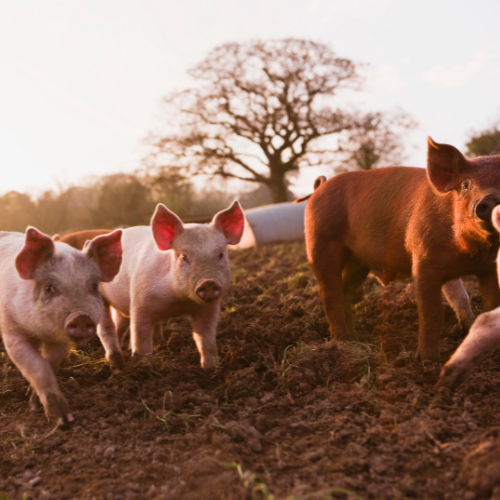
Is a healthy piglet actually virus-free?
For decades, the standard veterinary approach has been reactive: we see clinical signs—like diarrhea or wasting—and we hunt for the pathogen responsible. If we find a virus, we assume it's the culprit. But what if "healthy" farms are teeming with the exact same viruses we blame for disease?
To answer this, we look to the expertise of Marc Schyns, a well-known name in the European pig sector. A 2013 graduate of Utrecht University and former Veterinary Scientific Liaison at MSD, Marc recently achieved the prestigious title of European Veterinary Specialist in Porcine Health Management. This elite qualification is no small feat; it requires a rigorous 3-4 year residency, mentorship under experts like Wikke Kuller and Arie van Esch, the publication of multiple scientific articles, and passing an end examination.
With this unique blend of practical field experience and top-tier academic rigor, Schyns and his team utilized Next Generation Sequencing (NGS) to decode the swine enteric virome. In this deep dive, we explore his groundbreaking insights into the complex viral patterns of clinically healthy piglets, expose the limitations of traditional PCR, and provide actionable strategies for modern swine diagnostics.
Redefining "Healthy": The Enteric Virome Study
We often assume that a healthy piglet has a "clean" intestine. However, recent research challenges this dogma. Marc Schyns, in collaboration with MSD, Pathosense, and the Universities of Amsterdam and Utrecht, launched a study to characterize the enteric virome of piglets on healthy Dutch farms.
The Study Goal
The objective was simple yet profound: What viruses exist in the intestines of piglets on farms that are not experiencing clinical problems?.
If you diagnose a "sick" farm without knowing what a "healthy" baseline looks like, your interpretation is fundamentally flawed. To fix this, the team analyzed seven commercial farms using advanced diagnostic technologies.
The Critical Window: The Weaning Transition
The study focused intensely on the weaning period—the most stressful phase in a piglet's life where lactogenic immunity (maternal antibodies from milk) disappears, and diet shifts to solid feed. This is typically where we see diarrhea, runts, and wasting.
Sampling Timeline:
To capture the viral dynamics, samples were taken longitudinally at specific ages:
- 2 weeks (Pre-weaning)
- 3.5 weeks (Just before weaning)
- 5 weeks (One week post-weaning)
- 7 weeks (Three weeks post-weaning)
- 10 weeks (Nursery phase)
The "Healthy" Viral Cocktail: What Was Found?
The results were eye-opening. Even on farms with no clinical signs, the piglets were shedding a massive variety of viruses. This confirms that the presence of a virus does not essentially equate to disease; it is the pattern and quantity that matter.
1. Rotaviruses: A Constant Presence
Rotavirus is often the first suspect in scouring diarrhea cases. Yet, in healthy piglets, multiple strains were circulating fluently.
- Rotavirus A: Prominently present before weaning.
- Rotavirus B & C: These strains typically surged right around the weaning moment.
- Rotavirus H: A less commonly discussed strain, this virus appeared clearly later, often weeks after weaning.
2. Porcine Astroviruses: A Predictable Succession
The study identified a distinct chronological "changing of the guard" regarding Astrovirus types:
- Type 3: Dominant before weaning, then flattens out.
- Type 4: Appears immediately before or during the weaning transition.
- Types 1, 2, & 5: These appear mainly in the post-weaning phase.
3. Other Enteric Viruses
The study utilized qPCR to quantify several other viruses, painting a picture of a crowded ecosystem:
- Porcine Kobuvirus: Found mainly before weaning but became almost undetectable post-weaning (interestingly, it reappears in sows and boars).
- Others Detected: Porcine Sapovirus, Porcine Sapelovirus, and Enterovirus G were all frequently part of the mix.
Key Takeaway: Even on healthy farms, piglets experience a wave of viral replication immediately following weaning. This suggests that a "healthy" piglet is not one without viruses, but one that maintains a balance between viral challenge and immune response.
Diagnostic Dilemma: PCR vs. Next Generation Sequencing
For the practicing veterinarian, this data highlights a critical flaw in how we currently diagnose disease. We rely heavily on PCR (Polymerase Chain Reaction), but is it telling us the whole truth?
The "Holy Grail" Trap of PCR
PCR is specific—often too specific. It looks for a known genetic sequence. If the virus mutates or if you are dealing with a diverse family like Rotavirus, the PCR might fail.
- Primer Mismatch: Marc Schyns noted instances where Rotavirus B and C were present in high quantities, but the PCR returned a negative result.
- False Negatives: The primers simply did not match the specific variant of the virus in the sample, leading to a dangerous false sense of security.
- Diversity: Enteric viruses are highly diverse; some variants share only 80-85% genetic similarity, making "universal" primers difficult to design.
The NGS Advantage
Next Generation Sequencing (NGS), offered by services like Pathosense, flips the script.
- Unbiased Detection: Instead of asking "Is Virus X here?", NGS asks "What is here?".
- The "Football Field" Analogy: Marc compares NGS to watching a sports field. It shows you exactly which players are on the field. It doesn't tell you if they are scoring (causing disease), but it proves they are present.
Actionable Advice: If you have a clinical outbreak that looks like Rotavirus (scouring, wasting) but your PCR is negative, do not assume the virus is absent. The high variability of these viruses means you may be facing a primer mismatch. Consider NGS or alternative diagnostics.
Interpreting Results: The Balance of Health
If healthy pigs have Rotavirus, Astrovirus, and Kobuvirus, how do you distinguish a "normal" viral load from a pathogenic outbreak?
The Balance Theory
Health is not the absence of pathogens; it is the equilibrium between the viral load and the pig's immunity (maternal and acquired).
- Training the Immune System: It is hypothesized that early, controlled exposure to these viruses (while protected by maternal antibodies) helps "train" the piglet's immune apparatus.
- The Tipping Point: Problems likely arise when this balance is disturbed. Factors that can tip the scale include:
- Loss of Lactogenic Immunity: The sudden drop in maternal antibodies at weaning.
- Co-infections: High loads of "pathogenic" viruses like Rotavirus and Sapelovirus occurring simultaneously can overwhelm the piglet.
- Bacterial Synergism: Viruses may open the door for secondary bacteria like E. coli or Clostridium, or vice versa.
Benchmark for Health
Use the findings from this study as a benchmark. A "healthy" pattern involves a specific succession of viruses. Deviations from this pattern—such as viruses appearing too early (before maternal immunity acts) or in massive simultaneous spikes—may indicate a problem.
The Future of Pig Practice: Beyond Diagnostics
The role of the veterinarian is evolving beyond just diagnosing viral infections. As Marc Schyns points out, the European pig sector faces existential challenges regarding welfare and societal support.
Emerging Welfare Standards
Veterinarians must prepare for significant shifts in housing and management:
- Long Tails: Scandinavian countries (Sweden, Norway) already manage pigs with undocked tails effectively. This requires excellent health status to prevent biting behavior.
- Loose Farrowing: The transition to loose farrowing systems is likely a question of "when," not "if".
- Biosecurity Risks: More "open" systems favored by public opinion can increase exposure to environmental pathogens (e.g., from birds), complicating disease control.
Societal License to Operate
The biggest challenge for the future is maintaining the support base for pig farming.
- Circular Agriculture: We must better communicate the sector's role in the circular economy, specifically regarding the valorization of residual food flows.
- Communication: Veterinarians and farmers must proactively communicate their efforts in welfare and food safety to the public to bridge the gap between perception and reality.
Quick Reference: The "Healthy" Virome Checklist
Use this checklist when reviewing diagnostic reports for weaned piglets. If you see these viruses, remember they can be part of a normal microbiome.
|
Virus Family |
Pre-Weaning Status |
Weaning/Post-Weaning Status |
Notes |
|
Rotavirus |
Type A (Common) |
Types B & C (Spike at weaning) |
Type H appears weeks later. |
|
Astrovirus |
Type 3 (Dominant) |
Type 4 (Transition), Types 1, 2, 5 (Post-weaning) |
Distinct succession pattern. |
|
Kobuvirus |
Present |
Disappears / Low Detection |
Reappears in adult sows/boars. |
|
Sapovirus |
Variable |
Present |
Often co-exists with others. |
Red Flags:
- Missing the "succession" pattern (e.g., late viruses appearing early).
- Negative PCR in the face of obvious clinical signs (suspect primer mismatch).
- Concurrent heavy bacterial load (E. coli/Clostridium) disrupting the viral balance.
Frequently Asked Questions (FAQ)
Q: If healthy pigs have Rotavirus, should we stop vaccinating?
A: Absolutely not. Vaccination is crucial for stimulating maternal immunity (lactogenic immunity). The balance described in this article relies on the piglet receiving strong immune protection from the sow to "buffer" these viral infections.
Q: Can PCR completely miss a heavy Rotavirus infection?
A: Yes. Marc Schyns reported cases where high viral loads of Rotavirus B and C were missed by PCR due to primer mismatches. The virus was present, but the test couldn't "see" it.
Q: How does weaning age affect this viral pattern?
A: This study focused on standard weaning ages. It is hypothesized that organic farms with much later weaning ages might see a delayed viral pattern or a different dynamic, but this requires further research.
Q: Is the goal to eliminate all enteric viruses?
A: Likely not. Schyns believes that a controlled presence of these viruses helps train the immune system and might even occupy niches that prevent colonization by more harmful pathogens.
Conclusion
The era of binary diagnostics—"positive" means sick, "negative" means healthy—is over. As Marc Schyns' research demonstrates, the enteric virome of a healthy piglet is a complex, dynamic ecosystem.
Key Takeaways:
- Complexity is Normal: Healthy piglets carry a diverse load of Rotaviruses, Astroviruses, and others.
- Timing is Everything: The presence of specific viruses is often tied to age and the weaning event.
- Question Your Tools: PCR is powerful but prone to "blind spots" due to viral diversity. NGS provides the full picture.
- Look for Balance: Focus on the total load and the timing of infection relative to immunity, rather than just presence/absence.
What You Can Do Today:
Review your diagnostic protocols for scouring piglets. Are you relying solely on PCR? If you are facing "unexplained" diarrhea or poor growth, consider running a broader sequencing panel (NGS) to visualize the full viral landscape. Compare your findings against the "healthy baseline" described here to see if the viral pattern—not just the pathogen—is the problem.